To Speed A Slow Internet Connection With Control Your Antivirus
When your antivirus performs a scan. It produces a log. This log can be up to 100 megabytes of information each. The registry holds all this info. The addition of the info is not the major problem. Its that the information is placed in many places in your registry. This causes fragmentation of files.
Your computer's operating system must search through the massive files in the registry constantly. If the registry is error-filled, fragmented, or bloated with unnecessary and duplicate files, you will have major slowdown. Organize and keep it maintained, the problem will most likely be solved. You can scan to see the condition of your registry and see what resources you can unlock resources.Click Here to SCAN your registry
Also you should try to see what processes are loaded when your computer starts. Often the antivirus will check your email, scan, and even update at the same time. This may be occurring everytime you start up your PC. These acts can last as long as 3 hours. They may be running silently in the background without your knowledge. Maintain them by following the directions below or by tweaking the settings in your antivirus:
- Open your Start menu.
- Click Run
- In the command screen type msconfig.exe
- In the system configuration utility,click either service or startup
- Uncheck all programs that you dont want to load win the antivirus is starting
- Click OK
Tips For Firefox Browser
The browser is configured to load one web page or "request" a time. You can alter these settings to increase the amount of information that can flow into Firefox's pipeline.
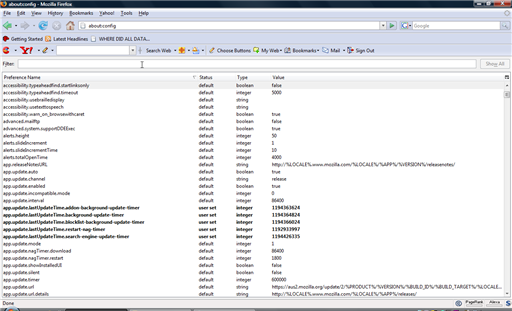
- Type “about:config” into the address bar and hit return. Scroll down and look for the following entries: network.http.pipelining network.http.proxy.pipelining network.http.pipelining.maxrequests
- Alter the entries as follows:
- Set “network.http.pipelining” to “true”
- Set “network.http.proxy.pipelining” to “true”
- Set “network.http.pipelining.maxrequests” to some number like 30. This means it will make 30 requests at once.
Category Article Slow Internet Connection, To Speed A Slow Internet Connection With Control Your Antivirus

Random Posts
-
In 2007 Dell started a highly publicized experiment with loading Ubuntu on some of its machines. Suffice to say, it wasn't a res...
-
 Jesmimi asked another interesting set of questions (first one led to the henna series ) I've read that apple cider vinegar is a natura...
 -
 Are you looking for Skyrim Fort Neugrad Treasure Map and Skyrim Treasure Map location guide ? I'm going to share information about Skyri...
 -
Golf is a game which is played with great enthusiasm and zeal all around the world. People really love to play this game all day long b...
-
 Skyrim Daedric armor is a cool armor! Skyrim Daedric armor is better than Dragon armor in base rating, despite needing a higher skill to m...
